
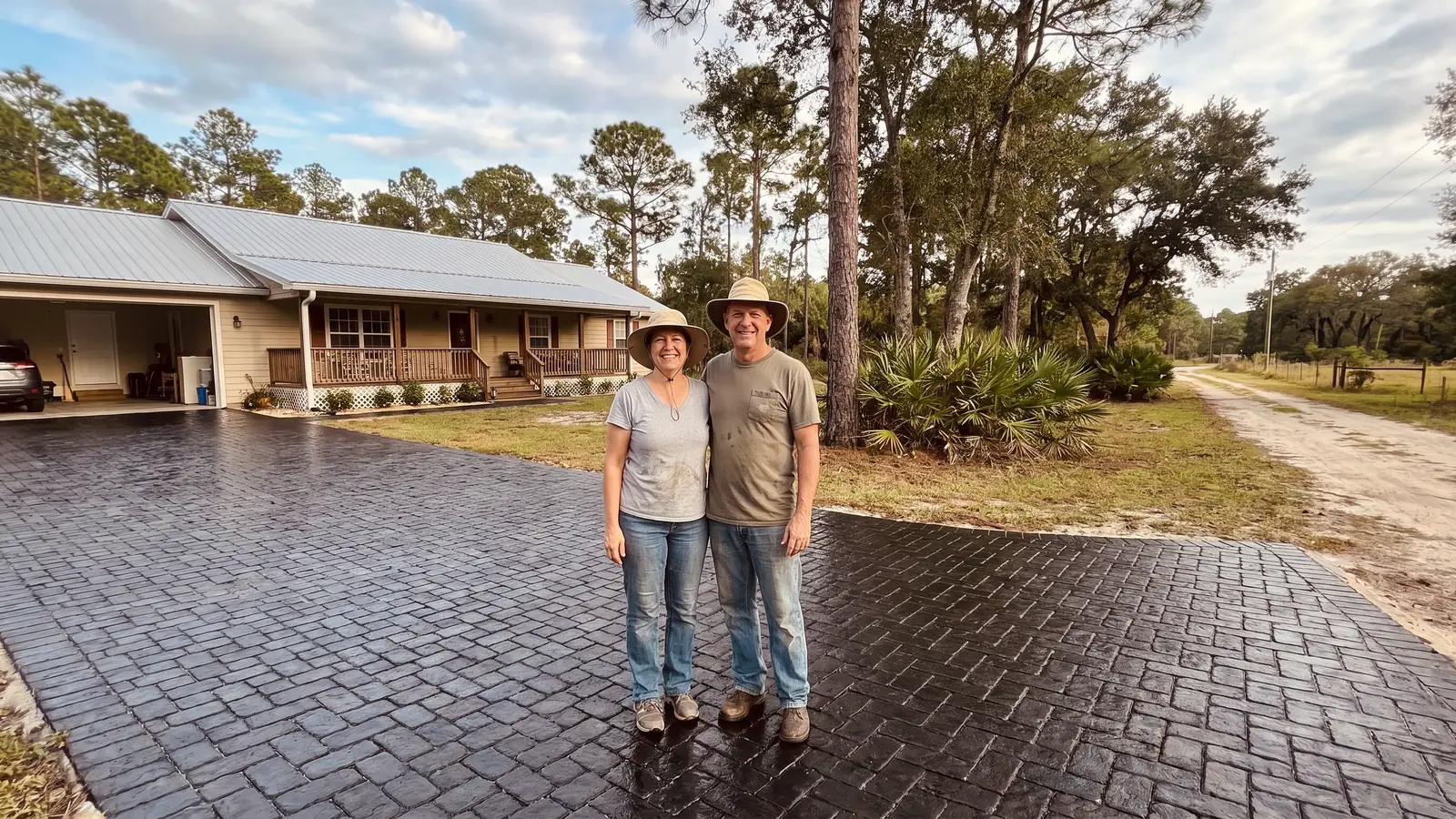
Paver sealing for Panama Park homes
Paver Sealing in Panama Park, FL
Panama Park driveways under old magnolias stain and green fast, so call (904) 875-8988 for a free sealing estimate.
- Brings out deeper paver color
- Fresh joint sand helps lock pavers in place
- Gives weeds less room to grow
- Makes the surface easier to keep clean
- Free estimate, no obligation
Request a Free Estimate
Free, no obligation.
Fast, careful paver sealing in Panama Park
Paver sealing is available across Panama Park, from the older blocks off Main Street to the streets near the Trout River. A local contractor washes, re-sands and seals driveways, walkways and patios, and a free estimate comes first. Once you ask for a free estimate, you can expect a reply within 1 business day, usually much sooner.
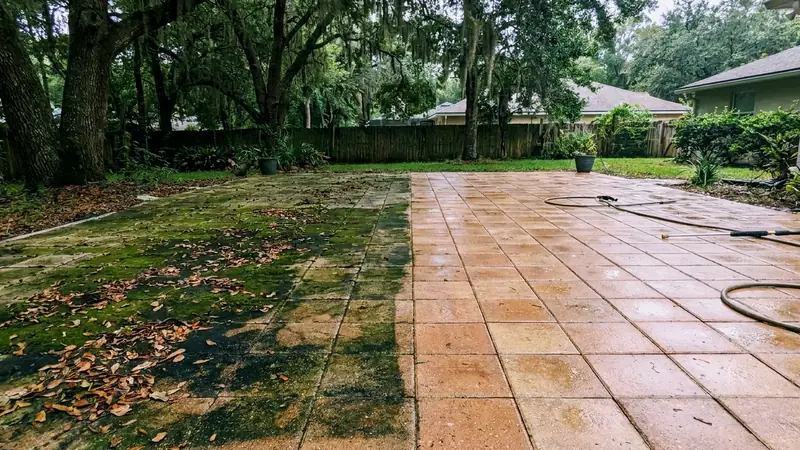
Picture a driveway with brown streaks from the tree overhead, a green edge where the shade sits, and weeds in the joints. After a wash, fresh sand and a new coat, the same pavers go back to one clean color. To talk first instead, call (904) 875-8988 and describe what you see.
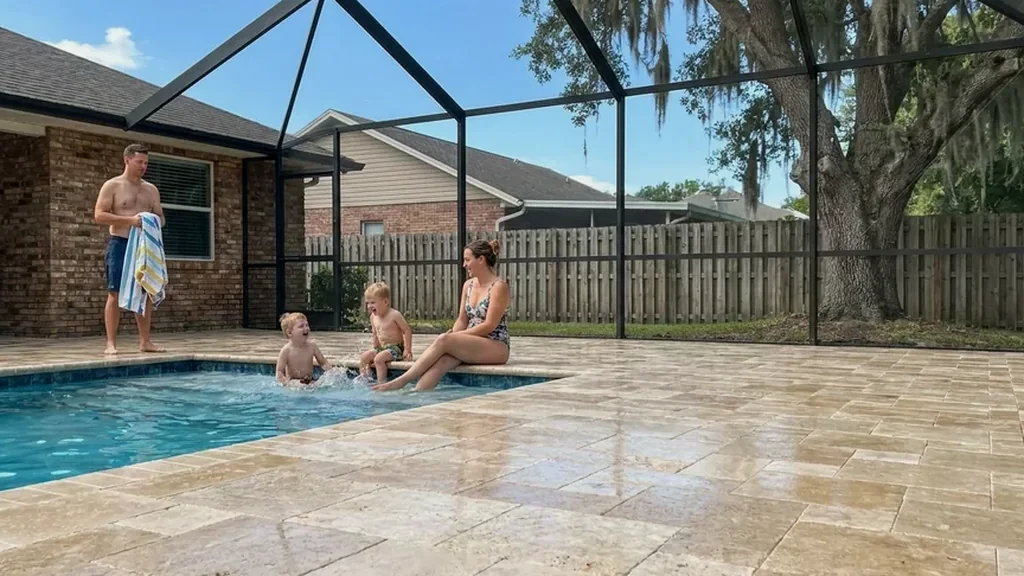
Why hire a local paver sealing contractor in Panama Park?
Panama Park homes sit under old shade trees and close to brackish river water, so a local contractor already knows what stains and sand loss here usually mean. To talk about your own driveway, call (904) 875-8988.
A free look first
The contractor measures your Panama Park pavers and gives you a price before you agree to anything. The estimate carries no obligation.
The range to expect on the estimate
Companies around Northeast Florida publish $1.75 to $3.25 per square foot to clean, sand and seal. Use it to check any Panama Park bid.
A finish for your house
Matte keeps a brick bungalow calm. A wet look deepens the color, though it shows scuffs sooner on a busy driveway.
You make the call
You choose the date and the finish, and you decide whether to go ahead. Nothing is expected of you after the visit.
Get Your Free Estimate in Panama Park
Tell us about your pavers in Panama Park.
Free, no obligation
What paver problems show up most in Panama Park?
Brown streaks under the magnolias and oaks
Early sales material for Panama Park counted more than 8,000 street trees, including magnolias, oaks and cedars. A Jacksonville company lists oak leaf tannins among the stains that collect on driveways, and Safe Touch says drives under a live-oak canopy pick up brown water stains. Sealer would lock those marks in, which means the cleaning has to come first. Look for streaks where leaves pile up after rain. A driveway that has gone a few seasons without a wash can show it by the second spring. The marks follow the leaf fall, so the darkest streaks usually sit beneath the heaviest branches. A contractor will point them out at the estimate and say what a wash can and cannot lift.
Green film on the damp, shaded side
A paving trade group says moss and algae should not grow on interlocking pavers unless the spot is heavily shaded. In Panama Park that points to the north side of a house or the edge under a canopy. Treatments have limited value where pavers stay damp and shaded, so a clean, sealed surface helps more than a one-time scrub. Expect green to return first in the same spots, which is why a contractor asks where the shade falls during your first visit. Pavers on the north side of a house are the usual place to see it start. Early planners lined the streets with magnolias, oaks and cedars, so shade comes and goes from block to block. That is why two neighbors can have pavers in different shape.
Joint sand that leaves with the summer rain
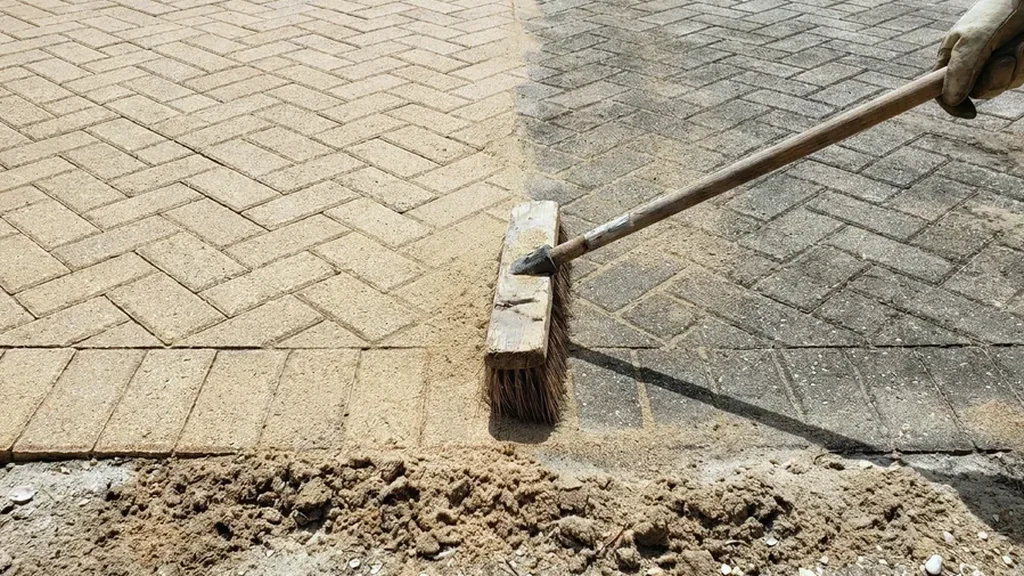
About 52 inches of rain fall in a Jacksonville year, and May through September brings the hardest storms. Per a Jacksonville paver company, that rain carries sand out of any joint that is not sealed. When joints open, soil moves in and weeds find a place to root. When you see weeds along a Panama Park walkway, the sand left first. Sand put back before the coat is what stops the weeds from returning right away.
A driveway that carries real weight
Developer George Clark's deed rules set homes at least 25 feet back from the street, which left room for a driveway and a front yard. One Jacksonville sealing company says a driveway takes a few tons each time a car pulls in. Turning tires loosen the sand and let pavers creep and settle. Dips near the street end or by the garage need repair before any sealer goes on. A low spot also holds water, which feeds the green film. Owners who plan to stay care how a drive reads from the curb, and an uneven or stained one is the first thing a visitor sees. Repairs and sealing are best done in one planned visit.
Sealer from an earlier owner
Lots here began selling in 1910, so many houses are decades old and any paver work was added later, often by someone before you. The reason is simple: water-based sealer cannot be applied over solvent-based sealer. An oil-based coat on the pavers has to be stripped first, according to a Jacksonville sealing company. A peeling or patchy coat is a clue that the old product needs a look. Keep any receipt or product name you find, since it can settle the question fast.
Which parts of Panama Park need the most paver care?
The older streets are where to start. The Oakwood Street area, bounded by Main Street, East 63rd Street and the CSX railroad, has well-kept historic homes, and the railroad splits the neighborhood in two. Just south of Panama Park, along 44th Street, most houses are brick. Tell the contractor which side of the tracks you live on when you ask for a free estimate.
Evergreen Avenue was the early shopping street, and many older residences stand near it. Brick walls and old stone edging do not like harsh rinse water, so a careful contractor keeps runoff off them. North Main Street, which carried most of the city's northbound traffic before Interstate 95, still has longtime businesses. A call to (904) 875-8988 lets you tell the contractor if the walls beside your pavers are brick or something else.
Owners live in most of the occupied homes in ZIP 32208. That means many pavers belong to people who plan to stay and want them to last. The city park at 6912 Buffalo Avenue includes tree-filled Buffalo Park, a reminder of how much shade this area holds. Once you know your shade level, ask for a free estimate for a price.
What does paver sealing cost in Panama Park?
Published prices for a full clean, sand and seal around the First Coast run from $1.75 to $3.25 a square foot. Where a Panama Park job lands depends on shade growth, missing joint sand and old sealer. Failed sealer has to be stripped first, which pushes the price toward the top. For a price on the pavers at your house, ask for a free estimate, with a free estimate.
Size and access matter as well. Smaller projects cost more per square foot in one Jacksonville cost guide, since prep time stays the same as the surface shrinks. A locked gate or a tight side yard behind an older house adds prep time too. Dial (904) 875-8988 and the contractor can sort out ahead of time which of these fit your lot.
| Paved area | Typical example | Clean, sand and seal |
|---|---|---|
| 300 sq ft | Small patio or walkway | $525 to $975 |
| 600 sq ft | Two car driveway | $1,050 to $1,950 |
| 1,000 sq ft | Large driveway or pool deck | $1,750 to $3,250 |
| 1,500 sq ft | Driveway plus pool deck | $2,625 to $4,875 |
Math based on the $1.75 to $3.25 per square foot that Northeast Florida paver companies publish. Your contractor sets the actual price after seeing the surface. Repairs, leveling and stripping failed sealer are usually extra.
How does a paver sealing job work in Panama Park?
Walk the lot and check what is on the pavers
The contractor looks at how your Panama Park pavers drain and where the tree shade falls. Sunken or lifted spots get reset first, since sealing over a dip only preserves it. When the pavers were sealed earlier, the old product decides what can follow, since water-based cannot go over solvent-based. Mention any oil, rust or leaf stains you already know about, and ask for the sealer name and finish in the quote. Bring up the shade and the trees too, since those drive most of the cleaning time on this side of Jacksonville.
Wash off the leaf stains and green film
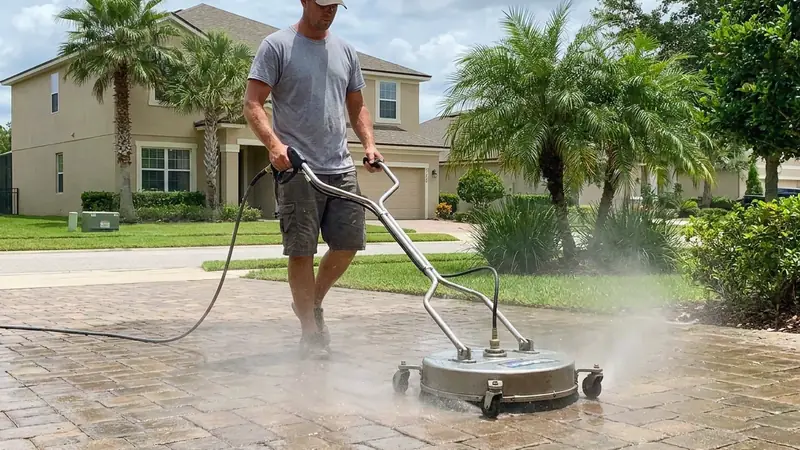
Cleaning comes next, with extra time under trees where tannin stains and algae build up. Oil and rust spots are pre-treated, and some deep stains may not come out fully. Rinse water stays off older brick and stone beside the pavers. The surface then needs time to dry before anything else happens. One Jacksonville page puts that at 24 to 48 hours after cleaning.
Sand goes back between the stones
The wash takes joint sand with it, so the contractor puts sand back before any sealer. Open joints on this sandy ground let soil in and give weeds a place to start. The joints get filled and the surface is swept clean. Long-neglected joints may take more sand and more time. Fresh sand also steadies the pavers, since lost sand lets them shift. Silica sand goes back into the joints, and the contractor can name the sand and its color in the quote. One Northeast Florida company offers six joint sand colors and says a low-contrast color makes the surface look clean and solid.
Wait for a dry surface
Sealer needs a dry surface, and a damp one is the usual cause of white or cloudy sealer. Jacksonville rain is heaviest from May to September, so a careful contractor watches the forecast. A shaded walkway can stay wet longer than a sunny drive. If the weather turns, the date moves. A short delay beats a cloudy finish that has to be stripped.
The sealer goes on in your finish
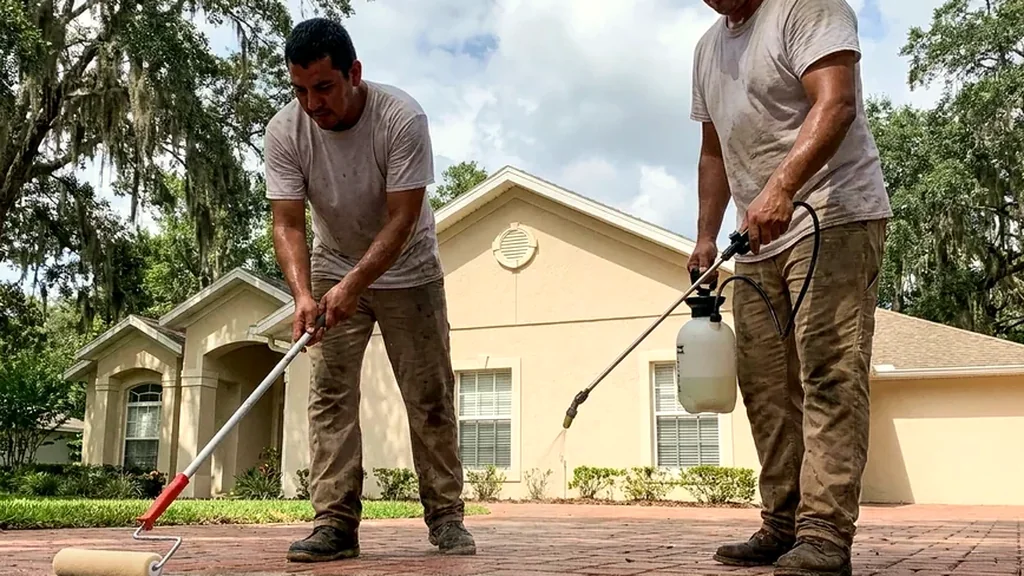
Sealer goes on in the finish you picked, usually sprayed and then back-rolled. A wet look shows scuffs sooner than matte, which is worth weighing on a driveway with daily tires. Local quotes for how long a coat holds run two to five years. Walking is usually fine within hours, and cars need about a day, a Jacksonville company says. Many homeowners ask to see the finish on a small spot first, and a good contractor is glad to show it. That keeps surprises off the driveway.
Complete paver services in Panama Park
On a Panama Park lot the work starts with a wash that clears leaf stains and green film from the shaded edges. Fresh sand goes into the joints next, and only then does a dry surface get its sealer. Keeping that order means nothing dirty is trapped under the coat. To ask how long each stage runs on your lot, call (904) 875-8988.
Leaf litter, oil drips and tires hit driveways hardest, while walkways beside the house stay damp and go green first. Patios behind older brick homes need gentle rinsing near the walls. Name the surfaces you have when you ask for a free estimate.
Pick water-based or solvent-based first, then the sheen. A coat left by a past owner can make that choice for you. A plain brick front looks calm with matte, and a wet look suits a drive you want rich in color. Call (904) 875-8988 to talk through your options.
Weather sets the calendar here. Most of Jacksonville's rain falls from May through September, and one local paver company calls spring and fall the steadier seasons. A shaded patio can stay damp long after a sunny drive has dried. For a date that fits your street, ask for a free estimate.
Questions to ask before you hire
- Will the sealer make my pool deck slippery when it is wet?
- What do I do about pavers that have sunk or shifted near my pool?
- How soon can cars drive on the driveway after the final coat?
- When would my pavers need a second coat, and what does that cost?
- How do you protect my lawn and plants from the cleaning runoff?
- What do you do about the rust stains from my irrigation water?
- Which sealer do you plan to use on my pavers, and is it a film-forming or a penetrating type?
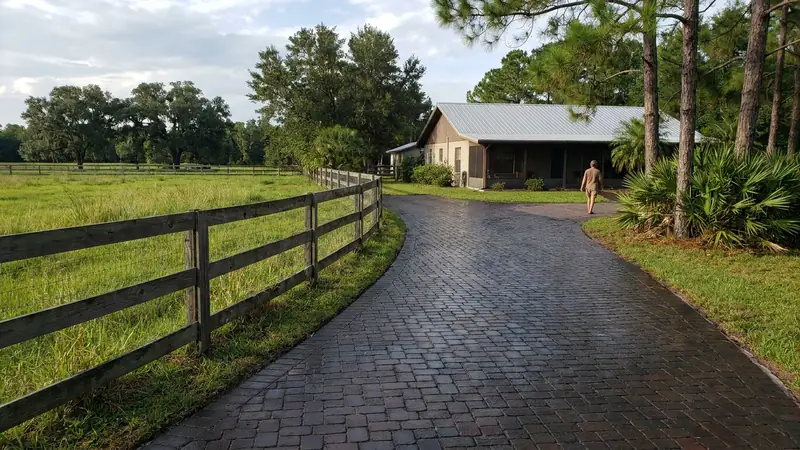
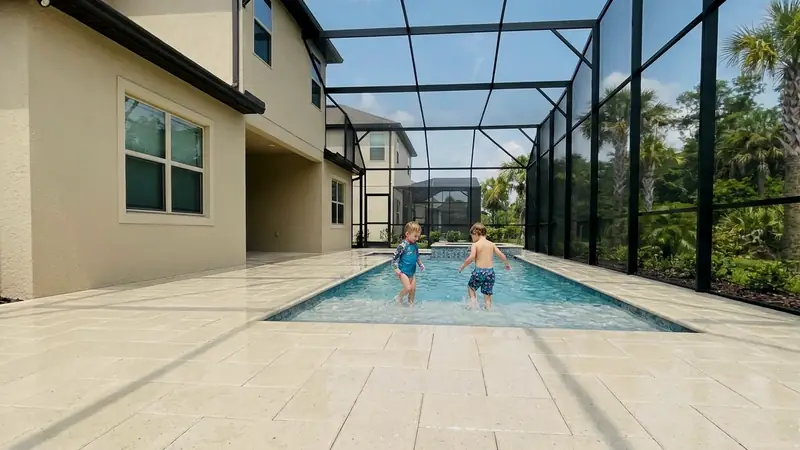
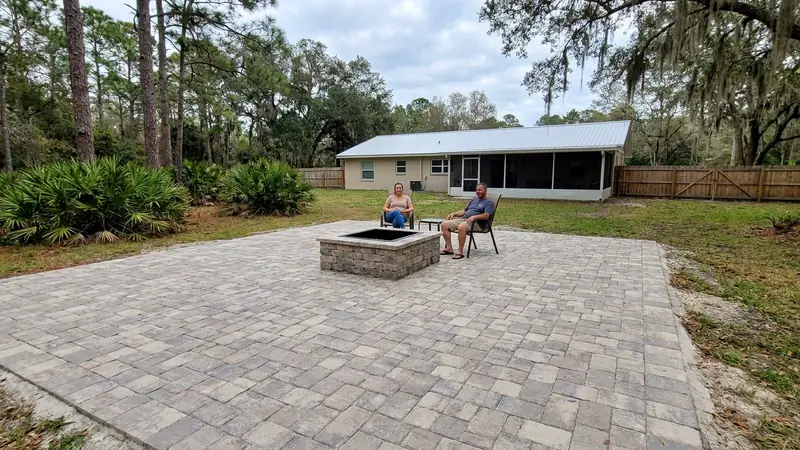
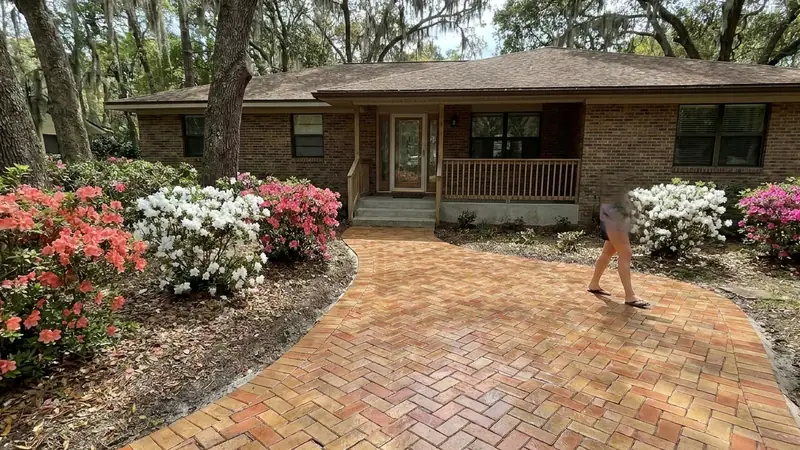
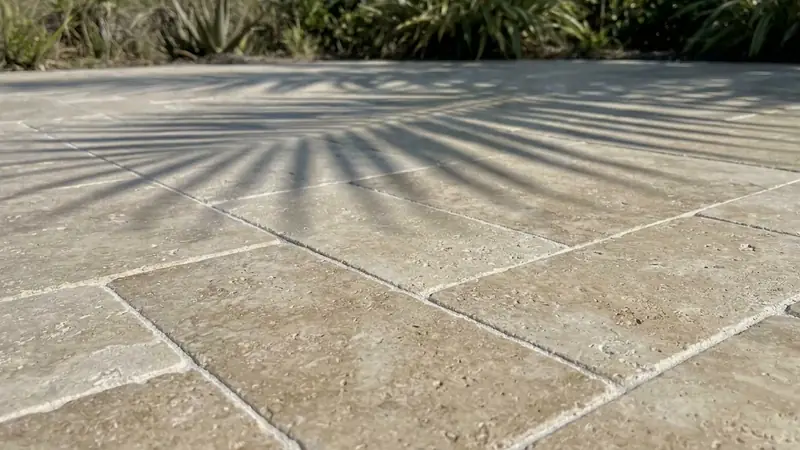
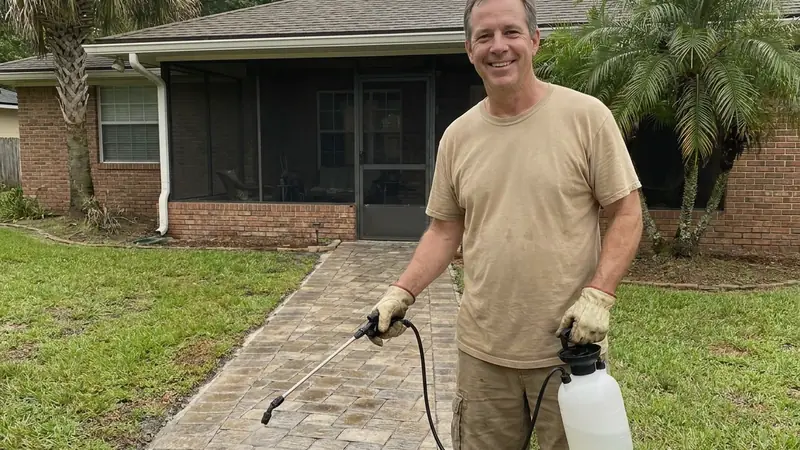
What do sealed pavers look like around Panama Park?
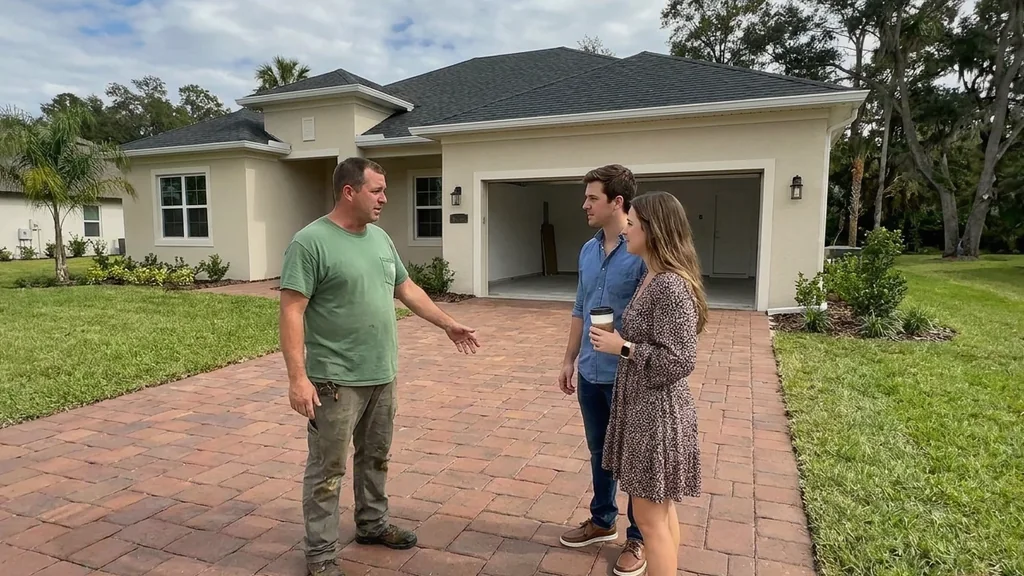
Why local matters in Panama Park
Shade and river-side dampness turn pavers green quickly on the Northside. A contractor who works here asks about the trees overhead before suggesting how much cleaning to do. Someone driving in from far away may skip that question. To reach a contractor near the Trout River, call (904) 875-8988.
Local habits matter on the schedule too. Summer storms in Jacksonville arrive in short, hard bursts, and a driveway under oaks can stay damp after one. A contractor used to this will wait for a dry surface rather than trap moisture under the coat. To ask how the work is planned around the forecast, ask for a free estimate.
Older neighborhoods add one more layer, since Panama Park has brick homes, historic houses and plain mid-century lots side by side. A contractor who knows the area expects different surfaces next to the pavers and plans the rinse water to match. If that sounds like your street, ask for a free estimate and note about when the house was built. There is no obligation to hire anyone.
What should I know about Panama Park before hiring someone?
Panama Park runs along the Trout River and the St. Johns River, about four miles north of downtown Jacksonville. Developer George Clark planned it as a railroad suburb in 1905, and the first plat dates to 1879. The Culver elementary school, designed by Henry Klutho, anchors the area's history. If your home is near any of them, ask for a free estimate and name your street.
The Trout River is brackish in its lower stretch and 0.6 miles across at its widest, near the St. Johns. Along the water you will find marinas and seafood markets, and Florida's first crab meat plant moved to the river here in 1934. At 7303 North Main Street, Panama Park Pharmacy has stayed in business since 1928. If you live close to any of these, call (904) 875-8988 with your address.
Frequently Asked Questions
What does paver sealing cost per square foot in Panama Park?
Published prices for cleaning, sanding and sealing run $1.75 to $3.25 a square foot around the First Coast. Heavy shade stains, thin joints and an old failed coat push a Panama Park job toward the top. A written quote that lists the square footage and the sealer name makes bids easy to compare.
Is it good to seal pavers in Florida, or is it wasted money?
For most driveways it pays off. Roughly three to five years is how long unsealed concrete pavers keep their color in the Jacksonville sun, one local company says, and storms also wash joint sand out. Sealing slows both, though the coat itself wears and has to be renewed.
How long does a paver sealer last in Panama Park?
Local quotes run two to five years, depending on sun, shade and traffic. A driveway in full sun wears the coat down sooner than a walkway under a magnolia. When water soaks in fast instead of beading, the coat is spent.
Can I clean, sand and seal pavers as one job in Panama Park?
Yes, and a local contractor usually treats it as one job done in a set order. The wash comes first, fresh sand goes into the joints, the surface dries, and then the sealer goes on. Skipping the drying step is the usual way a coat turns cloudy.
Will the brown leaf stains under my oak come out?
Many lighten a lot, though a few deep stains may not vanish. A Jacksonville company pre-treats oil, rust and tire marks before sealing and says as much about stubborn ones. Because sealer locks in whatever is on the surface, the stains are dealt with first.
Which month is best for sealing pavers near the Trout River?
A dry stretch matters more than the month. One Jacksonville paver company advises never sealing a damp surface or right before a forecast downpour. Spring and fall tend to offer steadier weather, but any dry week can work.
What happens to a sunken spot in my Panama Park driveway?
It gets repaired before sealing. One Jacksonville company says sealing over a sunken or lifted spot only preserves it. Point out the dips near the street end and the garage at the first visit.
Does a sealed driveway still grow weeds between the pavers?
Far fewer, since a sealer that stabilizes joint sand takes away the open gaps weeds like. A paving trade group links weeds to lost sand and widened joints. No coat can promise that none will ever return.
Should I pick a wet look or matte for a brick bungalow?
Matte keeps a plain, calm look beside brick, while a wet look deepens color and shows wear in the drive lanes sooner. Under heavy shade, many people lean toward matte. Ask the contractor to show both on a small test patch.
How long before my new pavers in Panama Park can be sealed?
Plan on 30 to 60 days after installation, per one Jacksonville paver company, so the white mineral haze called efflorescence can work out. Joints get a fresh layer of sand before the first coat goes on. The contractor can tell you which window fits your pavers.
When can the car go back on the driveway?
A day later is the usual answer. A Jacksonville sealing company says people can walk on it within a few hours, while cars wait a full day. Another gives 2 to 4 hours for feet and 24 hours for cars.
Nearby areas we serve
Ready for a Free Estimate in Panama Park?
Call (904) 875-8988 and tell us about your pavers.
Free, no obligation